Why is waterproofing critical in a shower with a linear drain?
Proper waterproofing protects the structure beneath the tile from moisture damage. Since linear drains—like those from Infinity Drain—are built into the floor system, waterproofing must create a continuous seal to prevent leaks and meet code compliance.
Are linear drains compatible with different waterproofing types?
Yes. Most linear drains are designed to work with:
Traditional waterproofing (e.g., PVC liner, copper pan, hot mop)
Liquid-applied membranes
Sheet membranes like Schluter®-KERDI
Selecting the correct drain model for the waterproofing method is essential.
Does Infinity Drain require a specific waterproofing brand?
No. Infinity Drain supports a range of waterproofing products. However, compatibility depends on matching the drain series to the membrane type.
Waterproofing Systems & Compatibility
Which Infinity Drain models work with sheet membrane waterproofing?
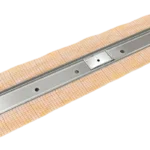
Infinity Drain’s FCS Series is factory-prepared with Schluter®-KERDI fabric and designed specifically for bonded sheet membranes. These drains maintain waterproof integrity and comply with Schluter system warranties.
Can Site Sizable® drains be used with Schluter®-KERDI?
No. Site Sizable® drains must be installed with traditional clamp-down drain bodies and are not compatible with surface-applied sheet membranes like KERDI.
Which drains work best with liquid or fabric-applied membranes?
Infinity Drain’s FF (Fixed Flange), FT (Side Outlet), and FCB (Fixed Flange Center) models are engineered for surface-applied waterproofing. They feature bonding flanges that allow for direct membrane adhesion.
Are traditional mortar bed methods supported?
Yes. The Site Sizable® (S) and Fixed Length (FX) series are compatible with traditional systems using vinyl liners, copper pans, or hot mop waterproofing.
Can I use a non-KERDI drain with Schluter® waterproofing?
No. Drains not designed with Schluter®-approved bonding surfaces may fail when used with KERDI systems. Only use the FCS Series with factory-applied KERDI fabric to ensure proper adhesion and maintain product warranties.
Design & Placement Considerations
How does waterproofing method affect drain placement?
The waterproofing method influences:
Drain location (wall, threshold, center)
Required floor slope and pitch
Overall height build-up
Early coordination between the drain model and waterproofing type ensures a successful and compliant installation.
Can drain outlet locations be adjusted to avoid beams or plumbing?
Yes. Infinity Drain offers custom fabrication to reposition outlets around jobsite constraints. These should be planned during the submittal and approval phase.
Should waterproofing details be included in drawings?
Yes. Construction documents should include the drain type, membrane system, and transition conditions for consistency between design and installation teams.
Can Infinity Drain be used in curbless or ADA-compliant showers?
Yes. Linear drains such as the FCS, FF, and SL Series are excellent for barrier-free showers. These allow for a single-slope design and minimal buildup while maintaining waterproofing integrity across the threshold.
The plumber typically installs the drain body. The tile contractor or waterproofing specialist applies the membrane. Both trades must coordinate to ensure membrane-to-drain integration is properly executed.
What should be confirmed before waterproofing begins?
Drain model is compatible with membrane type
Drain body and flange are securely installed
Outlet location matches site layout
Finished floor height and slope are accounted for
Membrane instructions are understood and followed
Does Infinity Drain provide waterproofing instructions?
Infinity Drain provides drain-specific installation manuals. Membrane application must always follow the manufacturer’s specifications, including curing time, thickness, and adhesion method.
Performance, Warranty & Limitations
Why does water leak around the drain after installation?
Leaks are almost always caused by membrane failure, not by the drain itself. Common issues include:
Incomplete bonding to the flange
Cuts or punctures in the membrane
Improper slope or buildup
Does Infinity Drain warranty cover waterproofing failure?
No. Infinity Drain warranties cover defects in the drain product, not the membrane installation. Improper waterproofing—regardless of brand—is the responsibility of the installer.
Do Infinity Drain drains require a second mortar bed?
It depends on the waterproofing method:
Traditional waterproofing requires a pre-slope mortar bed below the liner and a setting bed above.
Surface-applied membranes typically require a single bed sloped to the drain.
Are Infinity Drain grates watertight?
No. Grates are designed to allow water to flow through—not to create a seal. The waterproof layer is located beneath the tile assembly, not at the surface.
Can Infinity Drain be used in steam showers?
Yes—but the waterproofing system used must be rated for vapor permeability and installed per TCNA guidelines. Infinity Drain drains may need to be recessed into the floor to align with sloped tile planes in steam room floors.
Can factory-applied KERDI be used on channels longer than 96”?
No. Drains longer than 96” or those with corners are shipped in multiple sections. KERDI cannot span these joints at the factory. Waterproofing must be completed in the field.
Support & Technical Resources
Where can I find installation help and design tools?